Mobile HD

Broadcast TV Spectrum Repacking: The Devil Is In The Details

Broadcast TV spectrum repacking is coming, and for millions of antenna users, the consequences could be frustrating. As UHF channels above 37 get reallocated for Wi-Fi and mobile services, some stations face forced moves to low-band VHF frequencies - channels notorious for interference, noise, and demanding larger antennas. Real-world signal tests reveal just how difficult reception can become. Whether you need rabbit ears or a full rooftop upgrade depends heavily on where your local stations end up landing.

Pete Putman
Columns

Humpty Dumpty Strikes Again!

Aereo's Supreme Court defeat exposed a brazen attempt to redefine technical terminology - labeling entire broadcast receiver systems as mere 'antennas' to dodge copyright law. The 6-3 SCOTUS ruling correctly identified Aereo as functionally equivalent to a cable TV system. Now, in a stunning reversal, Aereo is petitioning courts for a compulsory license as exactly the kind of cable system it spent years insisting it was not. Lewis Carroll would be proud.

Pete Putman
column

Deconstructing Aereo

Aereo's Supreme Court battle hinges on whether each dime-sized antenna truly functions independently for individual subscribers. A licensed Amateur Extra Class operator and decades-long RF engineer digs into the physics behind Aereo's antenna arrays, revealing a critical gap between legal argument and electromagnetic reality. Close-spaced antenna elements don't behave in isolation - and that inconvenient truth may matter more than any courtroom brief.

Pete Putman
Columns

HDTV Expert - "Antenna" Digital TV: When All Else Fails...

Terrestrial digital TV proved its resilience during a severe ice storm in southeastern Pennsylvania, where a three-antenna home setup covering roughly 55 channels in the Philadelphia metro market delivered uninterrupted broadcasts while Comcast cable, Verizon mobile data, and VoIP all failed simultaneously. A TiVo HD DVR with a built-in terrestrial DTV tuner remained fully functional, underscoring the practical advantage of maintaining an over-the-air setup alongside subscription services. The experience also frames the ongoing FCC UHF spectrum auction debate, questioning whether reallocating broadcast frequencies to mobile carriers is wise given how reliably the one-to-many broadcast model performs when cellular networks collapse under disaster-driven traffic loads.

Pete Putman
Columns

HDTV Expert - Smartphones vs. Digital Cameras: The Death Knell?

Digital camera shipments fell for a third consecutive year, with CIPA data showing a 19 percent drop in worldwide camera shipments in August 2013 and point-and-shoot volumes down 40 percent year-over-year by late 2012, while even Canon's DSLR segment declined for the first time. Nikon's D3200, a 24.2-megapixel DSLR capable of 1080p/60 video at $497, illustrates how flagship specs now compete directly against smartphone convenience at a fraction of the cost. For consumers, the calculus increasingly favors smartphones that combine adequate image quality with instant social sharing, portability, and multifunctionality over dedicated cameras.

Pete Putman
Columns

HDTV Expert - Windows 8: What if they threw a party and no one came?

Windows 8 adoption has stalled dramatically, trailing even the notoriously failed Vista OS in uptake, prompting Microsoft to slash OEM licensing fees from $120 to $30 and Intel to cut Ivy Bridge CPU prices to push sluggish laptop sales. IDC projects Windows 8 will appear on only 7.4% of tablets by 2017, while Android and iOS are forecast to command a combined 94.8% tablet market share in 2013. For PC users and buyers, the practical takeaway is that discounted Windows 8 hardware is widely available, but the platform's long-term viability remains uncertain as the market shifts decisively toward tablets.

Pete Putman
Columns

HDTV and Home Theater Podcast - Podcast #576: One Week with a Tablet Remote

A one-week real-world test of replacing a Logitech Harmony One universal remote with an iPad mini paired with a RedEye IR network emitter and the DirecTV tablet app reveals a mixed outcome. The tablet setup offers genuine advantages, including no line-of-sight requirement and the ability to browse DVR playlists without interrupting the on-screen display, but tactile limitations make repeat functions like volume control unreliable. For households that rely on quick, feel-based button presses, a hybrid approach using the Harmony as the primary controller alongside the tablet as a supplemental interface proves more practical.

The HT Guys
Podcasts
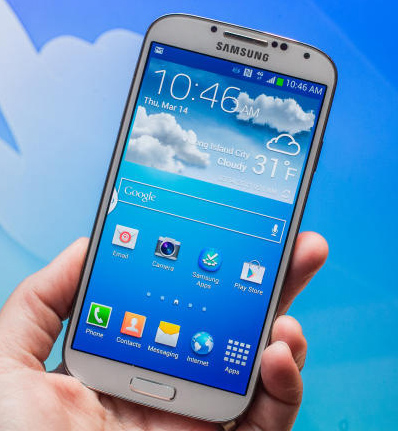
HDTV Expert - With Galaxy S4, Apple Eats More of Samsung's Dust

HDTV Expert - With Galaxy S4, Apple Eats More of Samsung's Dust

Samsung's Galaxy S4 features a 5-inch Full HD AMOLED display at 441 ppi, outpacing the iPhone 5's 326 ppi Retina Display and signaling a broader industry shift as multiple panel-makers demonstrate comparable 440-ppi LCDs. The phone adds an IR gesture sensor, IR LED for universal TV remote functionality, dual simultaneous cameras (13 MP rear, 2 MP front), a 2600 mAh battery, and runs Android 4.2.2 Jelly Bean on an octo-core processor in select markets. For consumers, the S4 raises the bar on display sharpness and sensor integration at a time when Apple's competitive response remains uncertain.

Ken Werner
Columns

HDTV Expert - Apple Must Become Phabulous

Apple's absence from the phablet segment poses a growing competitive risk, as ABI Research projects over 150 million phablet shipments in 2013, representing 18% of all smartphone demand. While ABI defines phablets as devices with screens 4.6 inches or larger, a more defensible threshold starts at 5 inches, where rivals like the Samsung Galaxy Note II (5.5-inch, 1280x720 AMOLED) and LG Optimus G Pro (5.5-inch, 1920x1080, 400ppi) set the benchmark. Apple's iPhone 5, with its 4-inch display, lags well behind these specifications, raising real questions about its smartphone competitiveness.

Ken Werner
Columns

HDTV Expert - The Tablets They Are A-Changin' - by Pete Putman

The Nook HD+ pairs a 9-inch 1920x1080 display (256 pixels per inch) with a 1.5 GHz OMAP4470 dual-core CPU and Android OS, making it a capable portable productivity platform when paired with Bluetooth peripherals and OfficeSuite software. A complete mobile office setup including a 32 GB MicroSD card, Targus Bluetooth keyboard, Microsoft Wedge mouse, and HDMI adapter came to $419 total. For business travelers who need document editing, spreadsheet access, and presentation playback, this configuration offers a compelling alternative to carrying a full notebook.

Pete Putman
Columns

HDTV Expert - The Front Line: Four From Pepcom

At Pepcom's November 2012 showcase in New York City, four products stood out ahead of CES: Lenovo's IdeaTab Lynx hybrid tablet running Windows 8 on an Intel Atom 1.8 GHz dual-core processor with a magnetic keyboard dock offering a combined 16 hours of battery life, and Vizio's 70-inch E701i-A3 Razor LED TV with 10-bit signal processing at a $1,999 MSRP. Barnes and Noble's Nook HD+ delivers a 1920x1280 WUXGA display at $269, while Mohu introduced a redesigned Leaf Ultimate and a new outdoor Sky HDTV crossed-dipole antenna for roof or attic mounting.

Pete Putman
Columns

Let's Talk about Medium-sized Displays for Tablets - and their Challenges

High pixel density in tablet displays, exemplified by the new iPad's 2048x1536 resolution at 264 ppi, forces a tradeoff: small pixels shrink aperture ratios in amorphous silicon TFT panels, requiring more powerful backlights and driving the new iPad's battery from 25 Wh to 42.5 Wh - a 70% power increase. Emerging alternatives including LTPS, IGZO oxide TFTs, and Samsung's Pentile Matrix LCD (demonstrated at 2560x1600, 300 ppi, consuming 2.5W versus 3.2W for a comparable RGB panel) each offer distinct paths to higher density at lower power. Understanding these tradeoffs matters for anyone evaluating premium tablet displays or anticipating next-generation hardware.

Ken Werner
Columns

HDTV and Home Theater Podcast - Podcast #542: Traveling with all your Media

Podcast episode 542 covers practical strategies for keeping media accessible during summer travel, from pre-loading smartphones and tablets with offline content to avoid unreliable 3G/4G streams, to packing compact streaming devices like Apple TV or Roku for hotel use. Key cable recommendations include HDMI, VGA, 3.5mm-to-3.5mm audio, and adapter combinations such as HDMI-to-DVI, ensuring compatibility with a range of hotel display setups. A DC-to-AC power inverter and seat-specific airplane power ports are highlighted as essential solutions for keeping devices charged on long journeys.

The HT Guys
Podcasts

HDTV Almanac - More U.S. Households Rely on TV Broadcasts

Over-the-air television reliance in the U.S. has grown to nearly 18% of TV households, with a GfK Media study showing approximately 7 million additional viewers dropping subscription services, bringing the exclusive over-the-air audience to more than 20 million. The shift is attributed to a combination of consumer cost-cutting and migration toward broadband-based streaming alternatives. Any FCC spectrum auction or reassignment must account for this substantial population that depends on free broadcast signals for access to information.

Alfred Poor
Columns

HDTV Almanac - Supreme Court Throws Out FOX and ABC Sanctions

The Supreme Court struck down FCC sanctions against ABC and FOX, including a $1.2 million penalty against ABC for nudity in an 'NYPD Blue' episode, ruling that the agency failed to provide fair warning about its 'fleeting expletive' enforcement rules before the incidents occurred. The narrow ruling leaves First Amendment questions unresolved and may also invalidate the FCC's half-million dollar fine against NBC stemming from the Janet Jackson Super Bowl halftime incident. With a backlog of 1.5 million indecency complaints and ongoing tension between broadcast and subscription-based cable standards, further Supreme Court review appears likely.

Alfred Poor
Columns