Manufacturing

Useful Gadgets: TiVo BOLT OTA

Twenty years of TiVo loyalty culminates in a hands-on look at the Bolt OTA, a cord-cutter's DVR that pairs four tuners and a robust streaming app lineup with the iconic program guide that made TiVo a household verb. Setup is refreshingly simple compared to the CableCard era, and 4K output plus MoCA-connected Mini VOX support add genuine modern muscle. Whether the channel scan results and real-world performance justify cutting the cable bill entirely is where things get interesting.

Pete Putman
column

Useful Gadgets – Channel Master Stream+ OTA/OTT Media Player

Channel Master's Stream+ defies the traditional set-top box mold with its compact, puck-like design that blends over-the-air reception with Android TV streaming. Supporting HDMI 2.0, HDCP 2.2, dual-band 802.11ac WiFi, and codecs including HEVC H.265, this diminutive sidecar tuner punches well above its size. Voice control works smoothly for streaming navigation, though OTA channel switching via voice has quirks worth knowing before you buy.

Pete Putman
column

Antennas, Antennas, On The Wall…Who Has The Best Reception Of Them All?

Indoor TV antenna performance varies wildly, and a rigorous side-by-side test reveals which models actually deliver reliable over-the-air reception. Tested against a spectrum analyzer and MPEG stream monitor across 11 Philadelphia-area stations, five antennas ranging from $13 to $65 compete head-to-head. Cord-cutting continues reshaping how Americans consume television, making antenna choice more critical than ever. The results expose some surprising winners - and at least one stylish underperformer you might want to reconsider.

Pete Putman
Columns

HDTV Expert - Consumer Television: It's Business As Usual (Or Maybe Not)

Samsung sold an estimated 49 million flat-panel TVs in 2013, cementing eight consecutive years at the top of the global television market, while Samsung and LG together command over 40% of worldwide TV share. Sony and Sharp continue bleeding market share, with Sharp holding just 5% globally and 3% in the U.S. as of Q3 2013, and LG's 55-inch curved OLED has already dropped 67% in price to roughly $4,910 in the UK. Vizio's new full-array LED 4K smart TVs, starting at $1,000 for a 50-inch model, signal further price compression that threatens premium-tier manufacturers.

Pete Putman
Columns

HDTV Expert - The Diverging Fortunes of Sony, Panasonic, and Sharp: Is There Life After Television?

Sony posted a net operating loss of $197M in Q2 2013, with its TV division alone losing $95M, while Panasonic raised its operating profit forecast to $2.75B after downsizing plasma TV operations and exiting plasma manufacturing entirely by March 2014. Sharp returned a $138M profit driven by solar cell demand, recovering from a $5.5B loss just one year prior. For consumers and investors, the data signals that Japanese TV brands face structural pricing pressure from Samsung, LG, and Chinese manufacturers like Hisense and TCL, with even the shift to 4K LCD TVs at roughly $80 per inch unlikely to reverse the trend.

Pete Putman
Columns

HDTV Expert - It's "Fade To Black" for Plasma and Projectors in Japan

Panasonic's exit from plasma TV production by March 2014 marks a broader collapse for Japanese display manufacturing, as plasma held only 5.7% global market share in FY2012 compared to LCD's dominant 87.3%. Chinese manufacturers are accelerating the pressure, with CSOT's 110-inch 4K panels and sub-$40-per-diagonal-inch LCD pricing reshaping both consumer and commercial AV markets. Mitsubishi Electric Visual Solutions has already withdrawn from the projector market entirely, and Sharp faces similar pressure, signaling that front projection and niche display technologies are losing ground to large-format LCD screens.

Pete Putman
Columns

HDTV Expert - A True Revolution in Display and Touch-screen Manufacturing Begins

Cambrios, TPK, and NISSHA have formed TPK Film Solutions to volume-produce ClearOhm, a silver nanowire-based transparent conductor that achieves near-100% optical transmission at sheet resistances as low as 25 ohms/square on PET substrates, outperforming the industry-standard indium tin oxide (ITO) on every key metric. Unlike ITO, which cracks and loses conductivity by a factor of 1000 or more after a single flex cycle, silver nanowire film maintains stable resistance over 50 bend cycles, making it viable for flexible and thin-form-factor devices. With Lenovo already adopting ClearOhm in its Flex 20 touchscreen and volume production targeted for Q2 2014, this transition has direct implications for the cost and design flexibility of consumer touchscreens worldwide.

Ken Werner
Columns

HDTV Expert - Tough Times Ahead For Toshiba

Toshiba is restructuring its television business after losses exceeding 50 billion yen ($512 million) annually, announcing plans to raise ODM-sourced production from 40% to 70% by FY2014 while closing two overseas manufacturing facilities and cutting roughly 3,000 jobs. The company is doubling down on large-screen Ultra HD (4K) LCD TVs and digital signage as its primary differentiators, while merging TV and CE operations into a new Toshiba Consumer Electronics Corporation. With a global TV market share below 5% and potential withdrawal from unprofitable regions including possibly North America, the path to viability remains uncertain.

Pete Putman
Columns

HDTV and Home Theater Podcast - Podcast #591: HDTV in the Great Outdoors

The Dish ViP211K Tailgater Bundle pairs a 10-pound portable satellite antenna with an HD receiver to deliver live HDTV at campsites, automatically locating DISH satellites within 15 minutes via a single coax cable that also carries power to the antenna. The ViP211K supports DVR functionality through an external USB hard drive (50 GB to 1 TB) for a one-time $40 fee, and Dish offers a Pay-As-You-Go plan with no monthly contract for non-subscribers. For display, options range from lightweight LCD TVs to a portable projector setup such as the Epson 85HD MovieMate ($779), with power sourced from a vehicle inverter, generator, or portable solar panel system.

The HT Guys
Podcasts
HDTV Expert - The Wacky World of OLEDs

HDTV Expert - The Wacky World of OLEDs

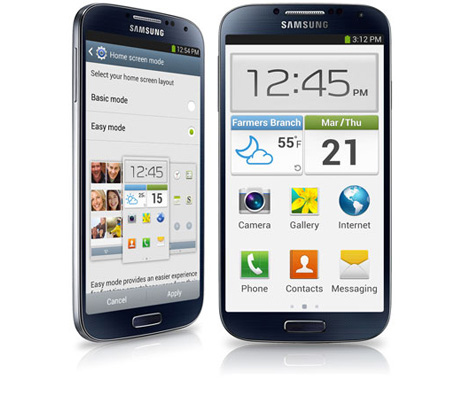
Samsung's Galaxy S4 features a Full HD, 440 ppi, 5-inch AMOLED display that has earned strong reviews, while Displaybank data shows 88.4% of OLED shipments in Q4 2012 were 4 inches or larger, confirming a mature small-screen market. Large-screen OLED TV, however, remains commercially marginal, with LG's curved 55-inch set launching in Korea above $13,000 and flat 55-inch OLED production still in the low hundreds. Manufacturers are pivoting to 4K x 2K LCD-TV as a more immediately scalable path to premium display sales.

Ken Werner
Columns

HDTV Expert - OLED-TV, Where are You?

LG's 55-inch OLED-TV, priced at roughly $12,000 in the U.S., faces serious production constraints as manufacturing yields at LG Display reportedly hover around 10%, with a target of 30% after defect repair - figures that will keep prices elevated for years. LG's planned Gen 8 OLED fab in Paju, with a monthly input capacity of 26,000 sheets, is not expected to reach mass production until H1 2014. Meanwhile, Panasonic and Sony each debuted 56-inch 4K OLED-TVs at CES 2013 using AUO Gen 6 backplanes, with Panasonic employing a printed front-plane process that could eventually reduce costs more aggressively than Sony's vacuum thermal evaporation approach.

Ken Werner
Columns

Panasonic Delivers Big OLED Surprise at CES

Panasonic stunned CES attendees with a 56-inch 4K (4Kx2K) OLED-TV panel fabricated using solution-based printing technology, marking the first large solution-processed OLED display shown publicly and a potential breakthrough for cost-competitive large-screen OLED production. Samsung and LG both debuted curved 55-inch OLED-TVs, each claiming a world-first, though the practical value of screen curvature for OLED remains questionable given the technology's already wide viewing angles. LG also confirmed its flat 55-inch OLED-TV would go on sale in the U.S. in March, its fourth announced commercial release date.

Ken Werner
Columns
Sony develops the World's First and Largest "56-inch 4K OLED TV" Prototype to be exhibited at 2013 International CES

Sony develops the World's First and Largest "56-inch 4K OLED TV" Prototype to be exhibited at 2013 International CES

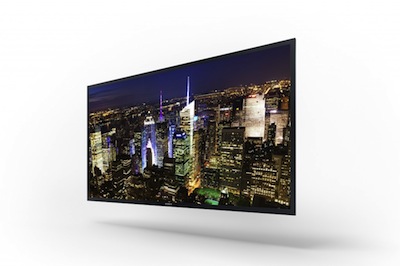
Sony unveiled a 56-inch 4K (3840 x 2160) OLED TV prototype at CES 2013, marking the world's first and largest panel of its kind at the time. The display uses oxide semiconductor TFTs in place of conventional low-temperature polysilicon TFTs, combined with Sony's proprietary Super Top Emission technology to achieve a high aperture ratio and efficient light extraction at large panel sizes. For consumers and professionals alike, this development signals a credible path toward commercializing large-format 4K OLED displays with high contrast, wide viewing angles, and rapid video response.

Bulletins

HDTV Expert - Red Ink at Morning; Investors Take Warning!

Sharp, Panasonic, and Sony reported severe fiscal losses in November 2012, with Sharp warning of a $5.6B loss and Panasonic shocking analysts with a $9.6B forecast - roughly 30 times market expectations - while Sony managed a $379M operating profit partly from a chemicals business sale. The near-commoditization of the TV market, now dominated by Samsung and LG at 45% combined share, has left Sharp at just 5% and Sony at 9% of LCD shipments. Analysts suggest all three companies must exit television manufacturing and pivot to stronger units like batteries, solar, IGZO display technology, and imaging to survive.

Pete Putman
Columns

No OLED-TV Panel Production from LGD until 2013

LG Display's 55-inch OLED-TV panels face delayed volume production until 2013, with the oxide-TFT backplane identified as the primary culprit after the company missed two self-imposed deadlines including the London Olympics and Q3 2012. LGD's color-by-white OLED approach, which uses continuous white emissive layers deposited from a linear source rather than Samsung's patterned RGB process, also carries unproven volume manufacturing risks, particularly around blue phosphor lifetime in the emissive mixture. For consumers and industry watchers, this signals that large-screen OLED TVs remain further from retail shelves than manufacturers had projected.

Ken Werner
Columns