Emerging Tech

HDTV and Home Theater Podcast - Podcast #531: Quantum Dot Display Technology

Quantum Dot LED (QLED) display technology, pioneered by MIT spin-off QD Vision, uses semiconductor nanocrystals smaller than 10 nanometers whose emitted light wavelength is determined by physical size rather than chemical composition alone, covering a tunable range from 460 nm blue to 650 nm red. Claimed advantages over OLED and LCD include up to 30% wider color gamut, 30-50% lower power consumption, and brightness reaching roughly 40,000 cd/m2. Consumers considering an early OLED purchase may want to monitor QLED's commercialization progress before committing.

The HT Guys
Podcasts

HDTV Expert - SID's New I-Zone Gives Free Space to Tout Innovation at Display Week

The Society for Information Display (SID) has launched a free Innovation Zone (I-Zone) exhibit area at Display Week 2012 in Boston (June 5-6), sponsored by E-Ink Holdings, to showcase pre-product-stage display prototypes and emerging input technologies such as gesture and voice. Submissions require a 100-word abstract and two-page summary, with selection criteria based on novelty, prototype quality, and potential application. The initiative gives startups, universities, and independent research labs a rare platform for focused public exposure in the display industry, with a Best Prototype award and coverage in Information Display magazine.

Pete Putman
Columns

HDTV Almanac - Progress on Thin Color Display

Samsung Electronics demonstrated a flexible quantum dot display technology, published in Nature Photonics, where nanoparticles emit narrow-spectrum light when electrically excited, with color tuned by particle size. A key achievement involves transferring quantum dot material stripes onto an active matrix backplane, though the technology remains at the laboratory stage with a lifespan of only 10,000 hours to half brightness versus 60,000 or more hours for plasma and LCD panels. Consumers should not expect commercial availability soon, but the technology shows potential for energy efficiency surpassing even OLEDs.

Alfred Poor
Columns

HDTV Almanac - FED: Not Yet Dead

AUO, one of Taiwan's two largest LCD manufacturers, has acquired intellectual property and assets from Field Emission Technology (FET), a Sony spin-off that developed field-emission displays (FEDs) before folding amid the economic downturn. FEDs combine an active matrix backplane with CRT-style phosphor screens and microscopic electron emitters per sub-pixel, delivering CRT-like response times, wide viewing angles, and emissive color performance in a thin panel form factor. AUO is targeting professional applications such as TV studios, though persistent manufacturing challenges and the failure of Canon's similar SED initiative make commercial success far from certain.

Alfred Poor
Columns

HDTV and Home Theater Podcast #329 - Five Technology Trends to Watch

The Consumer Electronics Association's annual 'Five Technology Trends to Watch' report highlights advances spanning gesture recognition, EEG-based neural headsets (such as Emotiv's EPOC at $299), OLED displays measuring just 3mm thick with claimed 40 percent power reduction, and Internet-connected televisions with up to 1 terabyte of on-demand storage. These trends collectively signal a shift toward more intuitive control interfaces, energy-efficient display technologies, and seamlessly connected home environments. Consumers tracking home theater upgrades or smart home investments will find these developments directly relevant to near-term purchasing decisions.

The HT Guys
Podcasts

HDTV Almanac - HDTV Alternative Technologies

Field Emission Technologies (FET), a Sony spin-off, is targeting commercial production of 26-inch Field Emission Display (FED) panels by end of 2009, with an initial run of 10,000 units per month using a repurposed Pioneer plasma manufacturing plant. FED technology places thousands of microscopic electron emitters behind each sub-pixel, producing CRT-quality images in a form factor as thin as LCD while avoiding LCD's inherent ~95% backlight efficiency loss. The initial product will be positioned as a professional video production monitor, meaning consumer pricing remains a distant goal contingent on scaling production economics.

Alfred Poor
Columns
HQV Benchmark Blu-ray, DVD and HD DVD

HQV Benchmark Blu-ray, DVD and HD DVD

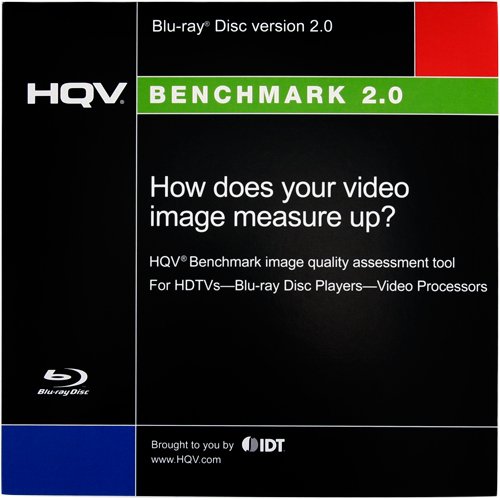
The HQV Benchmark discs from Silicon Optix offer a structured battery of deinterlacing and scaling tests across DVD (480i, no progressive flags), Blu-ray, and HD DVD formats, with Blu-ray and HD DVD tests centered on a SMPTE RP-133 1920x1080 1:1 pixel-mapped pattern. Most players fail the raw 480i cadence tests yet perform well with Hollywood titles because commercial releases embed progressive flags that guide the video processor directly. Understanding this distinction helps buyers evaluate whether a player or external scaler can handle edge cases like anime cadences, 4:3 letterboxed content, and native 1080i-captured concert or documentary material.

Richard Fisher
Reviews
Toshiba HD-A3, HD-A30, HD-A35 HD DVD and SD DVD players

Toshiba HD-A3, HD-A30, HD-A35 HD DVD and SD DVD players

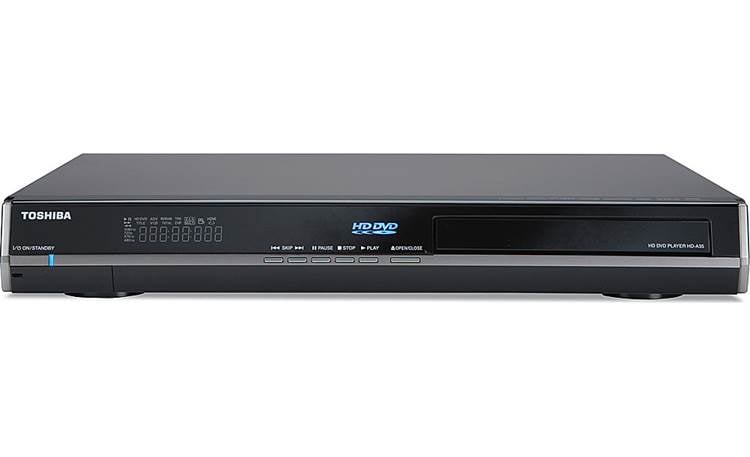
The Toshiba HD-A3, HD-A30, and HD-A35 represent the final generation of HD DVD players, with the flagship HD-A35 delivering native 1080p24 output and HDMI 1.3 bitstream support for all HD audio codecs. Bench testing against the OPPO DV-981HD reference player showed the Toshiba excelling in luminance frequency response, color decoding, and SD DVD scaling at 1080p60, though a firmware bug causes the player to remain locked in 1080p24 mode when switching to SD DVD content, producing aliasing and chroma artifacts. Buyers seeking reference-grade HD DVD and upconverted SD DVD performance at dramatically reduced street prices will find strong value here, provided they can tolerate manually switching output scan rates between disc formats.

Richard Fisher
Reviews

Plextor Announces New Internal Blu-Ray Drives

Plextor announced two internal SATA optical drives in early 2008 that support both Blu-Ray and HD DVD formats: the PX-B920SA, which writes BD-R at 4X (18 MB/sec transfer rate) and reads HD DVD, and the PX-B300SA, a read-only combo drive for both HD formats with 16X DVD+-R recording. Both drives include a 4MB data buffer, LightScribe support, and SATA interfaces delivering up to 150 Mbits/sec throughput. Users invested in either high-definition disc format can consolidate playback into a single drive without committing to one format exclusively.

Bulletins

HDTV Almanac - R.I.P. HD DVD

With Blu-ray winning the high-definition format war, retailers Circuit City and Best Buy launched compensation programs for HD DVD buyers: Circuit City extended returns to 90 days for full store credit, while Best Buy is issuing $50 gift cards to all HD DVD player purchasers with no time limit and no trade-in required. Best Buy also launched a trade-in program at bestbuytradein.com starting March 21, accepting HD DVD players and discs regardless of purchase origin, with prepaid shipping labels provided. Best Buy estimates the gift card program alone will exceed $10 million in total payouts.

Alfred Poor
Columns

HDTV Almanac - More Blu-ray Fallout

Samsung has cancelled the BD-UP5500 dual-format HD DVD/Blu-ray player announced at CES 2008, leaving the older BD-UP5000 hybrid available at under $500 while the format war winds down in Blu-ray's favor. Unlike multi-format computer optical drives where combining CD and DVD variants adds little cost, the technical differences between HD DVD and Blu-ray made single-box integration more expensive than separate units. With the U.S. economy weakening and standard DVDs still performing well on HDTVs, consumers face little incentive to invest $300 or more in a Blu-ray player, raising questions about the format's near-term profitability.

Alfred Poor
Columns

Blu-ray Wins: A Bittersweet Celebration

Toshiba's withdrawal from the HD DVD format war hands victory to Blu-ray, ending a costly industry battle in which hundreds of millions of dollars were spent backing competing high-definition disc formats. Both HD DVD and Blu-ray offered technically capable platforms for home video delivery, making the outcome difficult to predict even for developers and software companies. For consumers, the resolution means a single clear standard for high-definition physical media, though emerging storage and distribution technologies may soon reshape the landscape again.

Dale Cripps
Articles

A Special Deal on Sunrise Earth HD DVD Set

Discovery Channel's Sunrise Earth HD DVD set features 12 Season 1 episodes plus a bonus Secrets of the Sun episode across 4 discs totaling 11 hours and 55 minutes of high-definition content. The limited-time discount, paired with free shipping, mirrors a concurrent deal on the Planet Earth HD DVD set, which spans 11 episodes with multilingual subtitles in English, French, and Spanish. HD DVD owners should act quickly given uncertain stock levels, as both sets represent a rare opportunity to acquire premium nature programming at a reduced price.

Bulletins

HDTV Almanac - HD DVD for $50

Microsoft has dropped the Xbox 360 HD DVD player to $49.99, bundled with five free HD DVD titles at roughly $10 per disc, following Blu-ray's decisive victory in the format war. With hundreds of existing HD DVD titles now flooding clearance channels, including eBay listings starting at $0.99 with no bids, the collapsed market creates a low-cost entry point for high-definition viewing. Xbox 360 owners willing to invest in a discontinued format could assemble an HD library at steep discounts before remaining stock disappears.

Alfred Poor
Columns

Special Deal on Planet Earth HD DVD Set

The Discovery Channel's Planet Earth HD DVD set, a multi-episode natural history series more than five years in the making, is available at a discounted price of $29.95 for HD DVD owners through the Discovery Channel Store. The 11-episode set includes behind-the-scenes content covering the equipment and technology used in production, plus subtitles in English, French, and Spanish. HD DVD collectors looking to expand their high-definition library should act quickly, as stock at this price point may be limited.

Bulletins