4K Ultra HD

There’s More To The Story (There Always Is!)

Chasing a maddening WAN dropout problem through spectrum analyzers, faulty ground blocks, and noisy neighbor cable drops reveals how a single cheap component can destabilize an entire cable system. Comcast's Special Operations team ultimately confirmed what the test equipment suggested: intermittent connections create standing waves that tilt QAM carriers and corrupt upstream channels. The full diagnostic breakdown, including RF measurements and fix details, surfaces at InfoComm in June.

Pete Putman
Columns

Now You See It…Now You Don’t

Intermittent Internet dropouts plagued one home theater installer for months despite modem swaps, new coaxial runs, and shielded Cat 6 cables. A spectrum analyzer finally exposed the real culprit: a Comcast X1 set-top box blasting broadband RF interference every two seconds, coupling noise back through its own RF input and killing upstream modem signals. Swapping the offending Samsung-built unit for a compact replacement restored clean service instantly. The full diagnostic story holds lessons every cable subscriber should hear.

Pete Putman
Columns

Hey, Whatever Happened To superMHL?

Sometimes the most impressive technology never makes it out of the demo room. Silicon Image unveiled superMHL two years ago with jaw-dropping specs: 36 Gb/s throughput, 8K support, USB Type-C compatibility, and a symmetrical plug design that outpaced every rival interface. Yet despite stunning trade show demonstrations, superMHL has gone nearly silent in the market. The reasons involve royalty streams, slow HDMI 2.0 adoption, and a branding identity crisis that may have doomed a genuinely superior connector before it ever shipped.

Pete Putman
Columns

Cord-Cutting: A Slow And Steady Drip, Drip, Drip

Pay TV companies risk losing $1,248 annually per departing subscriber, yet cord-cutters report growing satisfaction the longer they stay away. A new survey finds 83% of cord-cutters access nearly all desired content without a cable or satellite subscription, while cord-nevers spend just $71 monthly on broadband and streaming combined. The real future of Comcast, Time Warner, and other major providers may already be written - and it has nothing to do with channel bundles.

Pete Putman
Columns

A More Mobile Mobile is Coming

Mobile data traffic will explode to 367 exabytes by 2020, with video driving 75% of that load - but autonomous vehicles and connected cars are quietly reshaping what mobile networks must deliver. Five defined levels of vehicle automation reveal a surprising gap: Level 3 may be too dangerous for human drivers to manage, forcing automakers to leap straight to full self-driving. The social dimension of man-machine interaction raises questions nobody has quite answered yet.

Ken Werner
Columns

xFinity: “The Future of Awesome” Is Looking A Bit Less Confusing…

Six service outages, a no-show technician, and nearly 30-year-old buried coaxial cable finally pushed one Comcast subscriber to escalate beyond standard customer service. A three-truck crew eventually traced the culprit to a corroded street drop where the cable literally pulled free of its connector. A new waterproof line, upgraded junction box, and a dual-band Cisco 802.11ac router delivering 50-plus Mb/s later, relief arrived - though whether the outages are truly finished remains an open question.

Pete Putman
Columns

Xfinity: The Future Of Confusion (Or, How I Learned To Stop Worrying And Tried To get Along With Comcast)

Eighteen years as a Comcast customer, a spectrum analyzer in the basement, and a working knowledge of cable infrastructure still couldn't save one HDTV veteran from a weeks-long spiral of botched self-installs, phantom charges, and six rounds of tech support. What began as a simple modem upgrade cascaded into crashed TiVos, unrecognized hard drives, Samsung set-top boxes that refused to initialize, and missing channel packages. The full accounting of what went wrong - and why - reveals something worth knowing before your next Xfinity upgrade.

Pete Putman
column

Trends: Ignore Them At Your Peril

Broadband subscribers at major U.S. cable providers just outnumbered pay TV subscribers for the first time ever - a milestone most industry watchers missed. Cable giants are losing video customers while Netflix surpasses 50 million worldwide subscribers, dwarfing even Comcast's base. The DVR, triple-play bundles, and traditional channel packages all face an uncertain future as households quietly rewire their entertainment habits in ways that will reshape the entire industry.

Pete Putman
column
HDTV and Home Theater Podcast - Podcast #628: New Pioneer Receivers

HDTV and Home Theater Podcast - Podcast #628: New Pioneer Receivers

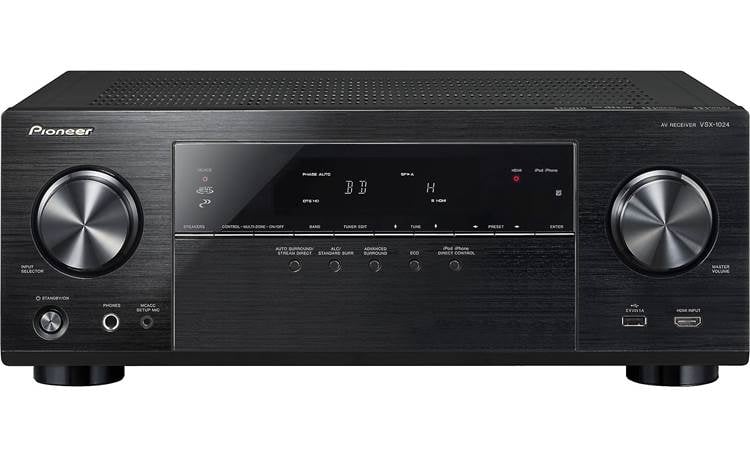
Pioneer's five new VSX-line receivers mark the first consumer AV receivers to support HDMI 2.0, enabling 4K/60fps passthrough and expanded color depth for Ultra HD displays. The flagship VSX-1124 ($599) pairs an ES9006S DAC running at 192kHz/24-bit with multi-channel FLAC/WAV playback and DSD 2.8 MHz support, while the Elite VSX-80 ($700) adds Crestron and Control4 compatibility with full two-way RS-232C-over-IP control. Buyers evaluating a 4K home theater upgrade will find these receivers cover both high-resolution audio and next-generation video connectivity in a single unit.

The HT Guys
Podcasts
HDTV Expert - Samsung Has No Trouble With The Curve

HDTV Expert - Samsung Has No Trouble With The Curve

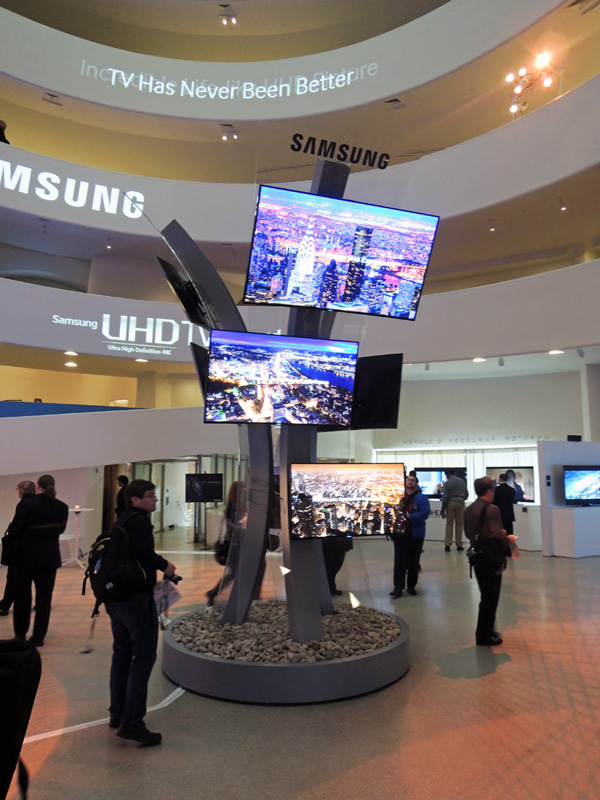
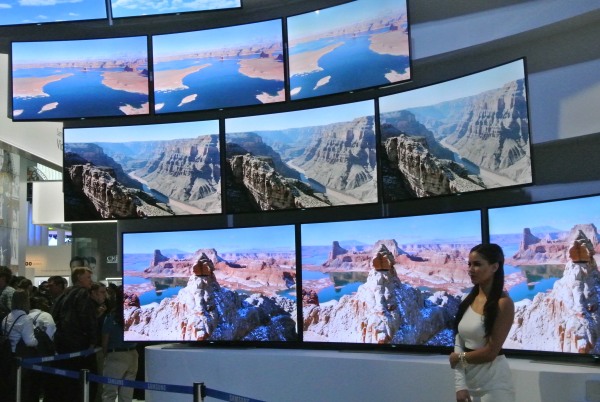
Samsung's 2014 TV lineup centers on curved 4K LCD panels, spanning the HU9000 and HU8700 series (55 to 78 inches, $4,000 to $8,000) alongside a 110-inch S9 UHD set priced at $150,000. The SEK-2500V UHD Evolution Kit adds HDMI 2.0 and HDCP 2.2 support via an Intel Quad Core processor, while a $300 UHD Video Pack bundles five 4K movies for owners lacking streaming options. With global TV sales down 3% in 2013, Samsung's push into 4K content partnerships and Smart Hub software signals a strategic shift toward software-driven revenue.

Pete Putman
Columns

HDTV and Home Theater Podcast - Podcast #627: JVC 4K UltraHD Projectors

JVC's Procision projectors, including the entry-level DLA-X500R at $5,000, use e-Shift3 technology to simulate 4K by offsetting two native 1080p D-ILA chips by half a pixel diagonally, achieving high pixel density rather than true 4K resolution. All 4K input signals are downscaled to 1080p before processing, meaning the projected image approaches but does not match a native 4K display like Sony's VPL-VW500ES at $10,000. Buyers gain impressive contrast ratios up to 150,000:1 native and strong color reproduction, making these a compelling compromise for home theater enthusiasts not yet ready to invest in true 4K.

The HT Guys
Podcasts

HDTV Expert - Thursday Evening at a Sony Store

Sony's 84-inch 4K LCD TV at $25,000 MSRP anchors a broader discussion of the company's strategic pivot away from PC hardware toward a media ecosystem built around smartphones and televisions. Quantum-dot enhanced LCD panels, which deliver expanded color gamut at modest added cost, illustrate how quickly hardware advantages erode in consumer electronics. Sharp's Quattron+ four-subpixel technology offers near-4K picture definition at roughly half the price of true 4K sets, though patent protection may prove a temporary shield in a fast-moving display market.

Ken Werner
Columns

Living with 4K - Bought an UHDTV? wait, is it Upgradeable?

Early UHDTV adopters face potential obsolescence as the ITU Rec. 2020 standard introduces features beyond 4K pixel resolution, including 10/12-bit color depth, 4:2:2 and 4:4:4 chroma subsampling, HDCP 2.2 content protection, and HDMI 2.0 support for 4K at 60fps - capabilities many current displays cannot handle. Most manufacturers offer no upgrade path, while Samsung's replaceable connectivity box and Sony's in-home hardware upgrades for models like the $25,000 VW-1000 projector represent notable exceptions. Buyers should carefully evaluate upgrade commitments before purchasing, as connectivity gaps similar to the HDTV-to-HDMI transition of 1998-2003 could strand millions of early adopters again.

Rodolfo La Maestra
Articles
Living with 4K - Nuvola 4K Player NP-1

Living with 4K - Nuvola 4K Player NP-1

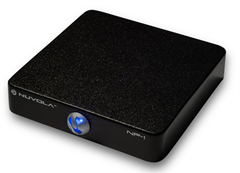
The Nuvola NP-1 is a $299 4K media player powered by an NVIDIA Tegra 4 quad-core processor with 72 GPU cores, running Android 4.2 and featuring a single HDMI 1.4 output limited to 4:2:0 chroma subsampling at 8-bit depth and 24/30 fps. It supports H.264-based 4K streaming and local playback via USB 3.0 storage, with H.265/HEVC support promised via firmware update, but its single-HDMI design forces buyers to use an HDMI splitter or sacrifice multichannel audio. Compared to Sony's $699 FMP-X1, the NP-1 offers broader TV compatibility and lower cost, though its video and audio connectivity limitations have real consequences for home theater installations.

Rodolfo La Maestra
Articles
HDTV Expert - Samsung was King of the CES Hill

HDTV Expert - Samsung was King of the CES Hill

Samsung dominated CES 2014 with a sweeping UHD TV lineup spanning 50 to 110 inches, featuring PurColor wide-gamut technology, a quad-core processor, and UHD upscaling claimed to deliver near-native-4K image quality. A joint announcement with M-Go and Technicolor confirmed that native-4K streaming requires 15 Mb/sec bandwidth while optimized upscaled content needs as little as 3 Mb/sec, giving streaming providers meaningful flexibility. Samsung also previewed a 4K content partnership with Amazon and an Evolution Kit for firmware upgrades, signaling a long-term ecosystem play that extends well beyond the display hardware itself.

Ken Werner
Columns